Method
How this actually works
No magic, and no pretending to be a technician. What follows is the whole method, including the parts where it stops being useful.
- 01
Describe the symptom
In your words, not in service-manual language. "Furnace fan runs but no heat" is a perfectly good starting point, and it is how most people arrive here.
- 02
Get the diagnostic order
Not a list of possible causes to sift through. An order: what to check first, what that result rules out, and what to check next. Free and safe checks come before paid and risky ones.
- 03
Know where to stop
Every sequence names the point where the job needs a certified technician, and why. Knowing that before you open something is worth more than the repair itself.
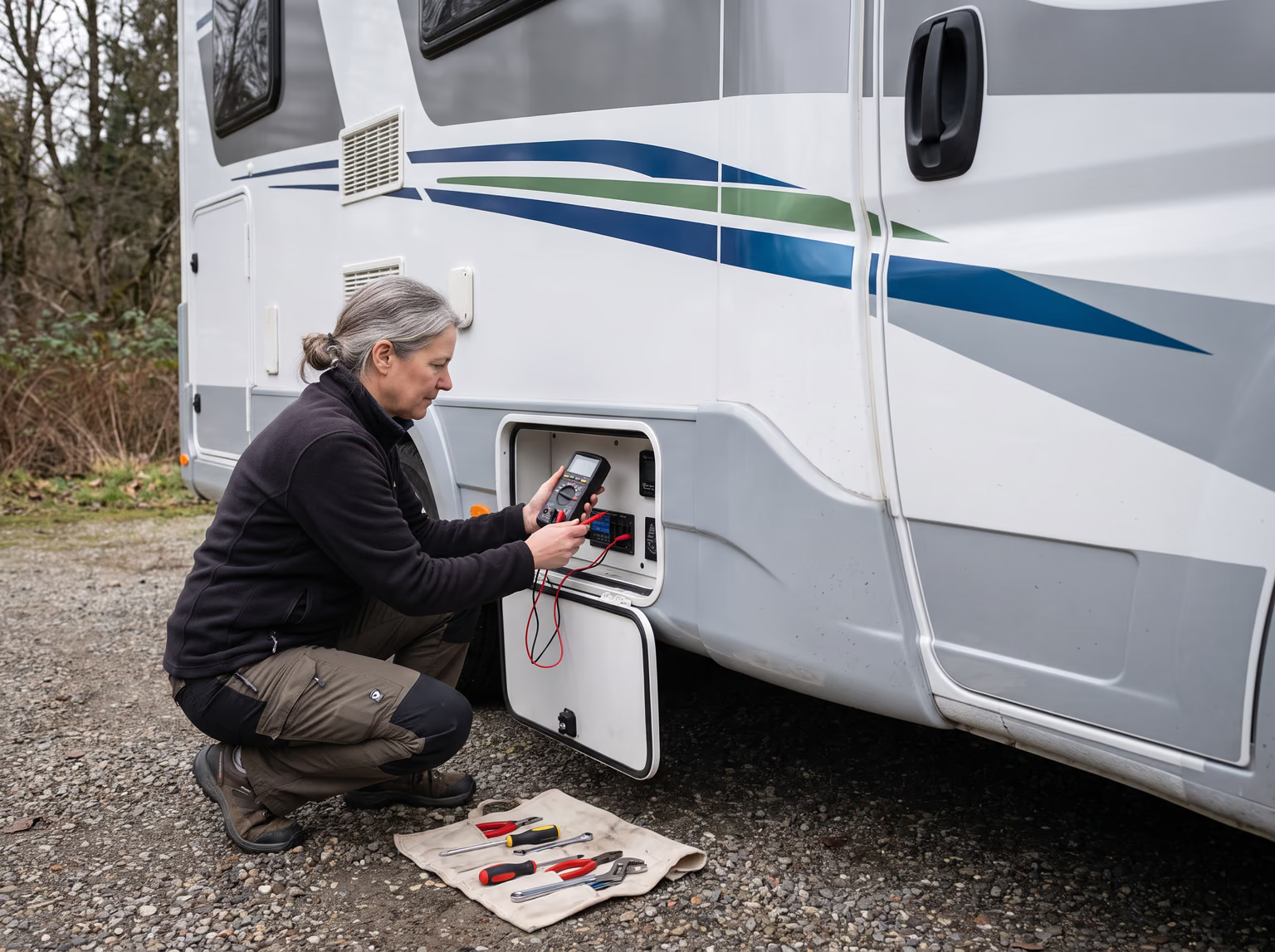
Why the order matters
Most RV repairs fail on sequence, not on skill
The expensive mistakes in RV ownership are rarely a lack of ability. They are checking the wrong thing first.
- A furnace control board gets replaced when the real fault was a battery reading 10.2V under blower load.
- A water pump gets replaced when the intake line had a loose fitting drawing air.
- A slide motor gets condemned when the click was low voltage collapsing under load.
Every one of those is a cheap check done in the wrong order. That is the problem this is built to solve.
Limits
What this is not
It is not a substitute for your own model's manual. RV builders change suppliers between model years, and the only document that describes your exact rig is the one that came with it.
It is not a substitute for a certified RV technician on propane, 120V, hydraulic or structural work. Those systems hurt people who get them wrong.
And it is not a warranty position. If your rig is in warranty, check before you open anything, because self-repair can void coverage on the exact component you are trying to fix.
Frequently asked questions
Where does the information come from?
Manufacturer owner and service documentation for RV appliances and systems, combined with established troubleshooting practice. Where a procedure varies by model, the guidance says so and tells you to confirm against your own manual rather than guessing on your behalf.
Will it tell me to do something unsafe?
It is built not to. Safety interlocks like furnace sail switches and limit switches are explained rather than bypassed, propane and 120V work carries explicit warnings, and every guide names the point at which the job should go to a certified technician.
What if the assistant does not know?
Then it should say so. An answer that admits uncertainty is more useful than a confident guess when the consequence of being wrong is a propane leak or a destroyed compressor.
Do I need an account?
Not to read anything. Every symptom guide, system guide and brand page is free and open. An account is only needed for the conversational assistant, which answers questions about your specific rig.